SBRT pricing depends on the tumour, number of targets, treatment plan and services included in the quote, so an advertised figure rarely tells the whole story. By the end, you will know how SBRT works, whether your case needs further assessment, what the treatment pathway involves and which questions to ask before booking.
Key takeaways
- SBRT commonly uses one to five high-dose treatment fractions.
- Ask whether planning scans, image guidance and motion management are included in the estimate.
- Suitability depends on tumour size, location, movement and nearby organs.
- Compare booking timelines, treatment technology, specialist review and follow-up care.
What SBRT Treats and How It Differs from Other Radiotherapy
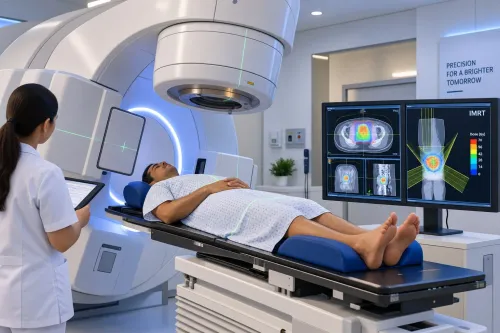
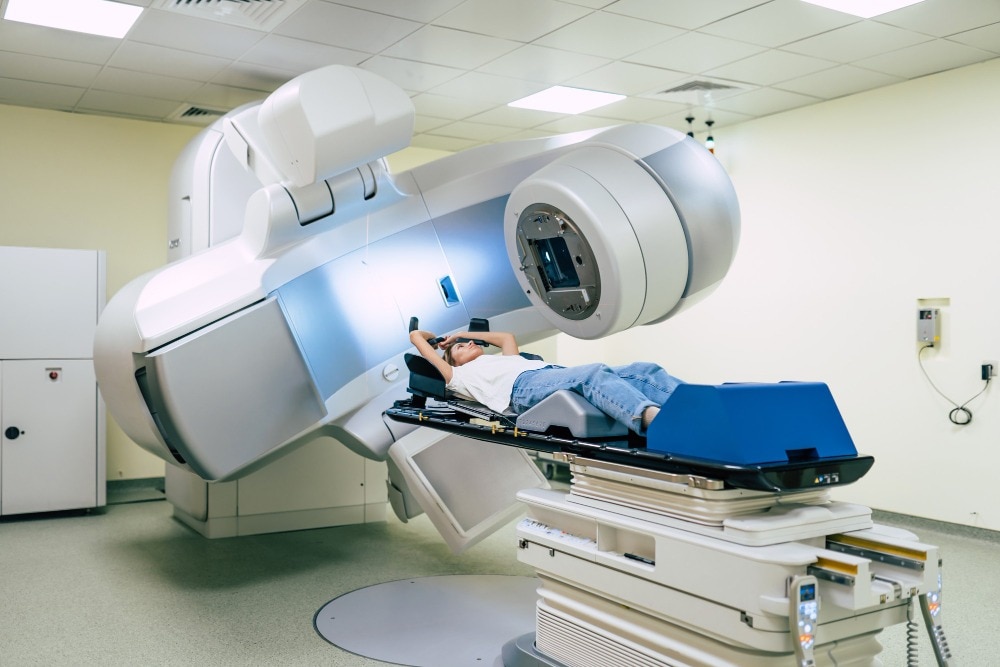
SBRT, or stereotactic body radiotherapy, delivers high-dose external-beam radiation to a precisely defined target in a small number of treatments—commonly one to five fractions. Immobilisation, detailed planning, daily image matching, position correction and respiratory-motion management protect nearby organs. Fewer visits do not mean less preparation or shorter appointments.
| Approach | What it means | Key difference from SBRT |
|---|---|---|
| Conventional radiotherapy | Lower doses delivered over many fractions | More visits and less dose per fraction |
| 3DCRT | Beams shaped from three-dimensional imaging | Less conformal dose shaping than modern stereotactic plans |
| IMRT | Modulated beam intensity creates a shaped dose | A planning method; SBRT can use IMRT |
| VMAT | IMRT delivered while the machine rotates around you | A delivery method; VMAT can deliver SBRT |
| IGRT | Imaging used to verify position before or during treatment | Guidance, not a dose regimen; SBRT requires reliable image guidance |
People comparing SBRT radiotherapy in Pimpri Chinchwad should confirm that the centre performs image-guided SBRT on-site, with stereotactic planning and documented quality assurance. A linear accelerator alone does not prove this capability.
Selected uses include:
- Lung: small, well-defined lesions
- Liver and adrenal gland: selected primary or metastatic tumours
- Spine and prostate: carefully planned cases
- Oligometastatic disease: limited lesions when local control supports the overall treatment plan
Who May Be Suitable for SBRT—and Who May Need Another Approach
SBRT is considered for selected early-stage cancers and limited metastatic or recurrent disease when the tumour can be targeted accurately without exceeding nearby organ limits. Common sites include small peripheral lung lesions, liver, spine, prostate, adrenal gland and oligometastatic deposits.
| Situation | What supports SBRT | When another approach may be safer |
|---|---|---|
| Small, limited tumour | Few lesions, suitable size and shape, clear separation from organs at risk | Large, irregular or numerous lesions |
| Favourable location | Adequate distance from spinal cord, bowel, oesophagus and major airways | Tumour abutting a sensitive organ; use a different dose, technique or treatment |
| Controlled disease | Curative treatment for early cancer, or local treatment within a plan for limited metastases or recurrence | Widespread disease needing systemic treatment such as chemotherapy or immunotherapy |
| Safe treatment position | You can remain still and follow positioning or breathing instructions | Inability to remain still or cooperate during imaging and delivery |
| Manageable previous treatment | No conflicting radiation exposure, or a safe re-irradiation plan | Prior radiation leaves critical organs near their dose limits |
The radiation oncologist also reviews biopsy results, stage, tumour motion, performance status and your overall health with the wider cancer team. SBRT is not automatically a substitute for surgery.
For a lung or upper-abdominal tumour that moves with breathing, ask how motion will be measured and controlled. Options include abdominal compression, breath-hold, respiratory gating or motion-encompassing imaging; a four-dimensional CT may be needed because a static planning CT can miss the tumour’s full movement.
What Happens During an SBRT Consultation and Treatment Course
The first appointment is a decision visit, not usually the day treatment starts. During an SBRT radiation therapy consultation, the radiation oncologist reviews your biopsy or cytology report, PET-CT, CT or MRI scans, previous radiation records, operative notes, medicines and general health. Bring both scan reports and the image discs or digital files.
The usual sequence is:
1. The doctor confirms the treatment aim, such as controlling one tumour, treating a limited metastasis or relieving symptoms, and checks whether the lesion’s size and position allow safe SBRT.
2. You attend simulation, usually a planning CT in the treatment position. A mould, vacuum cushion or other immobilisation device helps you remain still; contrast or breath-hold imaging is added when the site requires it.
3. The team outlines the tumour and nearby organs at risk on the scan. They create a high-precision plan that shapes the dose around the target while limiting exposure to the spinal cord, bowel, lungs, kidneys or other critical structures.
4. The radiation oncologist and medical physicist review and approve the plan. Physics quality assurance checks the machine, dose calculation and delivery before scheduling.
5. At each treatment visit, image guidance matches your anatomy with the planning scan and permits position correction. Respiratory monitoring or breath-hold instructions are used when tumour motion matters.
Treatment commonly takes one to five fractions, but each visit includes setup, imaging and verification, so time in the centre exceeds beam-on time. A follow-up appointment reviews side effects and plans surveillance imaging.
SBRT Radiotherapy Cost in Pune: What the Estimate Should Include
The final SBRT bill depends on the number of targets and fractions, tumour location, planning complexity and the imaging needed. An indicative private-sector range for many uncomplicated courses is ₹1.5 lakh–₹4 lakh; this is not a regulated tariff, and complex cases can cost more.
Before accepting a quote for SBRT radiotherapy cost in Pune, check whether it is a package or a set of separate charges:
| Quote format | What it may include | What to verify |
|---|---|---|
| Package price | Consultation, simulation CT, planning, delivery and follow-up | Number of targets and fractions, exclusions and refund terms |
| Itemised estimate | Separate fees for imaging, planning, physics and each treatment | Whether the listed total includes every required line item |
| Low promotional price | A limited treatment component | Whether CT simulation, immobilisation, contrast, image guidance or quality assurance is excluded |
Ask for these points in writing:
- Consultation, simulation CT, immobilisation and contrast, if required
- Treatment planning, image-guided delivery, physics quality assurance and treatment delivery
- Review visits and the first follow-up appointment
- Additional charges for anaesthesia, respiratory-motion management, re-planning or prior radiation
- The financial outcome if the plan is unsafe, treatment is postponed or the diagnosis changes
Multiple lesions, abdominal motion, nearby critical organs and complex techniques raise costs. Confirm that image-guided SBRT is delivered on-site; a linear accelerator alone does not prove that the centre has stereotactic planning and documented quality assurance. A radiation oncologist must approve the plan before you pay a booking amount.
How to Compare Clinics and Book SBRT Treatment in PCMC
A reliable comparison starts with capability, not the machine’s brand or a low headline quote. A stereotactic body radiotherapy clinic in Pune should perform stereotactic planning, daily image guidance and documented physics quality assurance on-site; a linear accelerator alone does not prove that it can deliver SBRT safely.
Ask whether respiratory-motion management is available when the tumour moves with breathing.
| Check | Ask the clinic to confirm | Warning sign |
|---|---|---|
| On-site programme | SBRT planning, image matching, position correction and physics QA | Equipment list without a named SBRT workflow |
| Quote | Consultation, simulation CT, immobilisation, contrast, planning, delivery and first follow-up | “Package” with excluded items |
| Scheduling | Specialist review, scan and pathology review, planning CT, contouring, approval, then treatment dates | A promise to start before plan approval |
| Treatment day | Setup and imaging time, not only beam-on time | Fewer fractions presented as no preparation |
To book sbrt treatment pcmc safely, request these records and answers in writing:
- The radiation oncologist’s recommended target, fraction number and reason SBRT fits your anatomy.
- Whether nearby organs, previous radiation or multiple lesions require another approach.
- The number of targets, re-planning policy and charges for anaesthesia or specialised motion control.
- The emergency contact and first follow-up plan.
Dr Siddhesh Tryambake can help review whether the proposed plan matches your diagnosis and prior treatment before you commit. Compare written estimates, ask who performs each step, and schedule only after pathology, imaging and treatment approval are complete.
Related service
Radiation Therapy Treatment in PCMC | Phoenix Cancer Care Clinic Advanced SBRT Radiotherapy for Precision Cancer Treatment At Phoenix Cancer Care Clinic, PCMC, Dr. View service → |
Frequently asked questions
What does SBRT treat, and how is it different from standard radiotherapy?
SBRT delivers high-dose external-beam radiation to a precisely defined target, commonly in one to five fractions. It uses detailed planning, immobilisation, image matching and position correction to protect nearby organs.
Who may be suitable for SBRT?
Suitability depends on the tumour’s size, location, shape, movement and distance from sensitive organs. A radiation oncologist must review diagnostic scans and treatment goals before recommending SBRT.
What happens during an SBRT consultation?
The team reviews your diagnosis and scans, assesses nearby organs and respiratory motion, discusses treatment goals, and explains the expected number of fractions, preparation and follow-up.
What should an SBRT radiotherapy cost estimate in Pune include?
Ask for a written breakdown covering consultation, planning scans, immobilisation, treatment planning, image guidance, motion management, each treatment fraction and follow-up charges. Confirm whether taxes, medicines and additional imaging are separate.
How can you compare SBRT clinics in Pimpri Chinchwad?
Compare specialist review, planning and image-guidance processes, motion-management capability, appointment availability, written pricing and follow-up arrangements before you book SBRT treatment in PCMC.
Keywords