Choosing a radiation technique involves more than finding the newest machine or the shortest route to a treatment centre. You will learn how 3DCRT creates an individual treatment plan, when its shaped beams can protect nearby organs, how it compares with other techniques, and which questions to ask before treatment begins.
Key takeaways
- 3DCRT shapes radiation beams around the tumour using planning CT images.
- Ask how your treatment plan protects nearby organs and limits dose exposure.
- Compare 3DCRT with IMRT, VMAT and stereotactic radiotherapy for your cancer.
- Confirm planning scans, treatment visits, side effects and follow-up arrangements before starting.
How 3DCRT turns your scans into an individual radiation plan
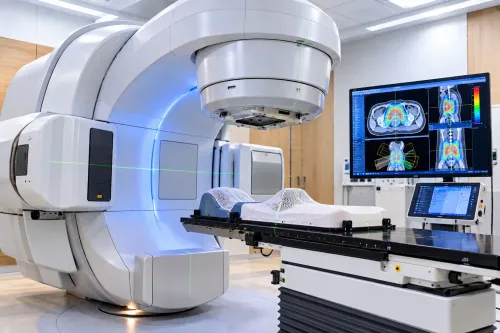
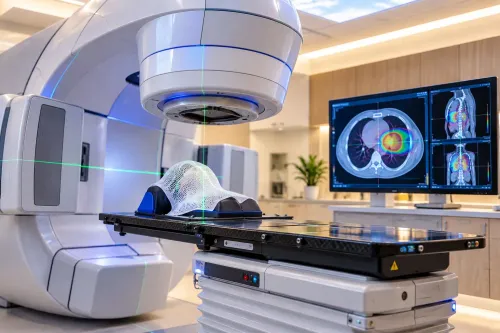
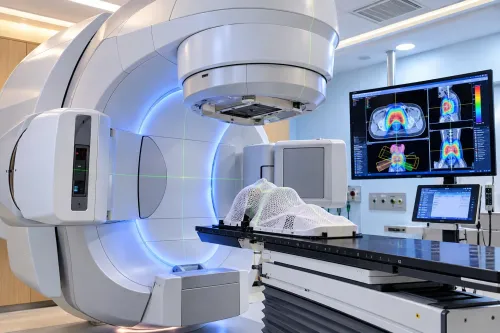
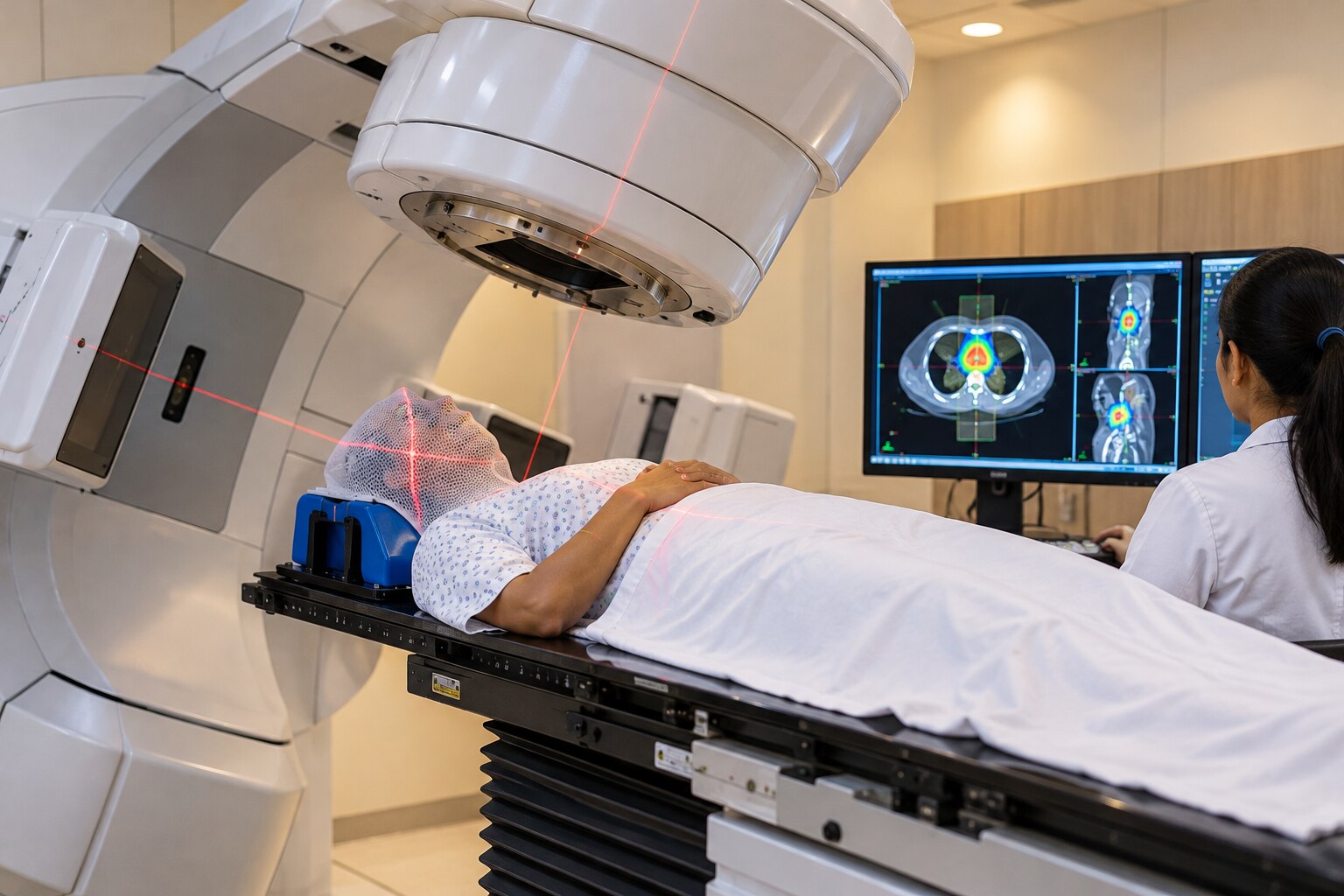
Three-dimensional conformal radiation therapy uses a planning CT scan to build a three-dimensional map of your tumour and nearby organs. The treatment team then aims radiation beams from different angles, shaping each field to match the target rather than treating the area as a flat image.
During simulation, a radiation oncologist identifies the tumour or treatment area and marks organs at risk, such as the spinal cord, lungs, heart or bladder. Treatment-planning software calculates how the beams will distribute the prescribed dose through that map. The plan becomes personal through decisions about:
- The exact target and organ boundaries drawn on your CT images
- The total dose and dose per session
- The number and direction of beam fields
- Dose limits set for nearby healthy organs
This is more anatomically tailored than older two-dimensional planning based mainly on plain X-rays. It does not mean the plan uses your tumour’s genetic profile; CT anatomy, diagnosis, stage and treatment goal drive 3DCRT.
Before delivery, the radiation oncologist reviews target coverage and expected organ exposure. A medical physicist checks the dose calculation and machine settings, while image verification confirms that your position matches the plan. If breathing, weight loss or tumour movement changes the anatomy, the team must reassess accuracy.
For anyone comparing 3DCRT radiotherapy in Pune, CT simulation, qualified staff, documented machine quality assurance and appropriate verification matter more than the clinic’s location.
The practical cancer treatment benefits—and their limits
The most defensible benefit is better control of where radiation goes—not a promise of cure. Compared with older two-dimensional planning, 3DCRT can reduce exposure to selected nearby normal tissues while delivering the prescribed dose to the tumour. The degree of protection depends on tumour location, beam arrangement, dose, anatomy and the organs at risk.
Ask your radiation oncologist to connect the proposed plan to these practical points:
- Which normal organs receive less dose than they would with a two-dimensional plan?
- Does the plan provide documented coverage of the entire treatment target?
- What short-term and long-term side effects remain possible?
- Why is 3DCRT preferable to IMRT, VMAT or another technique for your tumour?
- How will movement from breathing, weight loss or organ filling be checked?
These are the meaningful 3DCRT cancer treatment benefits: shaped beams, reproducible CT-based geometry, recorded dose coverage and possible sparing of selected tissues. They do not make treatment risk-free. Radiation outside the target can still reach healthy organs, and clinically important toxicity can still occur when the tumour lies close to sensitive structures.
Reducing normal-tissue dose must not compromise cancer coverage.
Treatment length also does not automatically become shorter; the dose and number of fractions depend on cancer type, stage and treatment goal. People comparing benefits of 3DCRT radiotherapy in Pune should assess CT simulation, planning expertise, machine quality assurance and image verification—not location or marketing claims alone.
When 3DCRT is suitable, and how it compares with other techniques
Doctors select 3DCRT when the tumour has a simple or moderately complex shape and shaped beams can spare nearby organs. It can suit selected breast, prostate, lung, brain, bone, head-and-neck and pelvic cancers, but diagnosis, stage, treatment goal and organ position decide the plan—not the city or treatment label.
| Option | Main difference | When it applies |
|---|---|---|
| 3DCRT | Uniform-intensity beams shaped to the target | A practical choice when organs can be adequately protected |
| IMRT | Varies radiation intensity within each beam | Useful when the tumour wraps around critical organs or needs a sharper dose gradient |
| VMAT | Delivers modulated beams while the machine rotates | Useful for complex shapes, with efficient delivery and demanding planning checks |
| IGRT | Uses imaging before or during treatment to confirm position | Added when breathing, bladder filling, weight loss or movement could shift the target |
| SBRT | Delivers very precise, high-dose treatment in few fractions | Selected small, well-defined tumours or metastases away from sensitive structures |
Ask why 3DCRT is preferred over IMRT or VMAT, and whether IGRT is needed for movement or anatomical change. SBRT is not automatically better: its high dose per fraction requires strict selection and accuracy. Radiation usually uses repeated fractions so normal tissue can repair; dose and visit count depend on cancer, intent, chemotherapy and health.
For 3D conformal radiation therapy in Pimpri Chinchwad, check that the centre has CT simulation, planning software, a radiation oncologist, medical physicist, trained technologists, documented machine quality assurance and appropriate image verification. A consultation should explain organ-specific risks and alternatives.
What planning and treatment visits involve
At consultation, the radiation oncologist reviews your diagnosis, stage, scans, biopsy results and treatment goal: curative, adjuvant, neoadjuvant or palliative. Ask why 3DCRT fits your case, what organs are at risk, how many visits are planned, and how breathing or weight changes could affect accuracy.
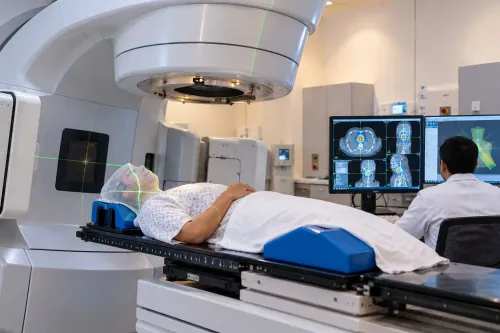
1. During CT simulation, you lie in the treatment position while a planning CT records the treatment area. A mould, mask or other immobilisation device helps you repeat that position; skin marks or tiny reference tattoos guide daily setup.
2. The radiation oncologist outlines the tumour and nearby organs on the CT images. Planning software calculates beam angles, field shapes, prescribed dose and dose-volume information for organs at risk.
3. Before treatment starts, the radiation oncologist and medical physicist check target coverage, organ dose limits and machine parameters. Patient-specific quality assurance confirms that the machine can deliver the approved plan accurately.
4. At each session, technologists position you using the marks and immobilisation device, then perform the centre’s image-verification checks when indicated. You must remain still while shaped beams deliver radiation; the treatment itself is painless, and staff monitor you throughout.
The number of sessions has no universal 3DCRT schedule. It depends on cancer type and stage, total dose, treatment intent, concurrent chemotherapy, nearby normal tissues and your overall condition. Fractions spread treatment over repeated visits so normal tissues have time to repair between doses. A plan may therefore involve a few sessions or several weeks.
Questions to ask before choosing 3DCRT in Pune
Choose a centre that can show how your plan will be created, checked and adapted—not one that only advertises 3DCRT radiotherapy in Pune.
Ask a radiation therapy specialist in Pune to explain your diagnosis and stage, treatment intent—curative, adjuvant, neoadjuvant or palliative—and why 3DCRT fits better than IMRT, VMAT or another technique. Request the expected dose, number of fractions, nearby organs at risk, likely side effects and alternatives.
Ask these practical questions:
- Does the centre have CT simulation and treatment-planning software that creates dose-volume reports?
- Who reviews the plan: a radiation oncologist, qualified medical physicist and trained radiotherapy technologists?
- How are target coverage, organ dose constraints, machine parameters and patient-specific quality assurance checked before treatment?
- What image verification is used at each session, especially if breathing, weight loss or anatomy can change positioning?
- What happens if the plan cannot protect a nearby organ within its dose constraint?
| Evidence to compare | Strong answer | Warning sign |
|---|---|---|
| CT simulation | Scan-based mapping of the tumour and organs | Planning from examination or older images alone |
| Quality assurance | Documented machine checks and patient-specific plan verification | “The machine is advanced” without records or explanation |
| Technique choice | Clear comparison of 3DCRT with IMRT, VMAT, IGRT or SBRT | One technique recommended for every cancer |
| Follow-up | Named contact for side effects and treatment changes | No plan for problems between fractions |
At a consultation with Dr Siddhesh Tryambake, ask to see how your prescribed dose and organ constraints were reviewed. The safest choice is the team that explains its reasoning in terms of your anatomy and treatment goal.
Related service
Radiation Therapy Treatment in PCMC Advanced 3DCRT Radiotherapy at Phoenix Cancer Care Clinic, PCMC At Phoenix Cancer Care Clinic, PCMC, Dr. View service → |
Frequently asked questions
How does 3DCRT create an individual radiation treatment plan?
A planning CT scan maps the tumour and nearby organs in three dimensions. The team selects beam angles, field shapes and dose to cover the target while limiting exposure to healthy tissue.
What are the practical benefits and limits of 3DCRT?
3DCRT can conform radiation to the tumour better than older two-dimensional treatment and support organ protection. Its dose shaping is less flexible than IMRT or VMAT when the tumour has a complex shape or lies close to sensitive organs.
When is 3DCRT suitable compared with other radiation techniques?
Suitability depends on the tumour’s size, location, movement and relationship with nearby organs. Ask whether 3DCRT, IMRT, VMAT or stereotactic treatment offers the best balance of tumour coverage and normal-tissue protection.
What happens during 3DCRT planning and treatment visits?
You attend a planning CT appointment, receive positioning instructions and may receive skin marks or an immobilisation device. During treatment, you lie in the planned position while the machine delivers radiation from selected angles.
What should you ask before choosing 3DCRT radiotherapy in Pune?
Ask which technique is recommended and why, how the plan protects nearby organs, how many sessions you need, which side effects to report, who reviews your treatment, and how follow-up is arranged.
Keywords