Age alone does not decide whether an older person can safely complete VMAT radiotherapy. The useful decision depends on the cancer’s location and purpose, the person’s physical and cognitive abilities, the treatment burden, and whether the proposed plan protects important organs better than realistic alternatives. By the end, you will know what clinicians assess, which questions to ask, and when a shorter or simpler radiation plan may be wiser.
Key takeaways
- Assess fitness, frailty, memory and daily support—not age alone.
- Review kidney function, medicines, mobility and treatment goals before VMAT.
- Compare VMAT with simpler radiation schedules and other techniques.
- Confirm travel, treatment time, side-effect support and emergency contacts in Pune.
Age is not the deciding test: assess function, frailty and treatment goals
Being an older adult does not, by itself, make VMAT radiotherapy unsuitable. The better question is whether VMAT radiotherapy is suitable for older adults in Pune after considering the cancer, the person’s physical reserve and the treatment goal.
A clinician usually weighs:
- Cancer site, stage, treatment intent, previous radiotherapy and whether VMAT offers a meaningful dose advantage for nearby organs.
- Frailty, mobility, falls, pain, nutrition, kidney function, heart function and lung function.
- Memory, hearing, vision and the ability to understand instructions, lie flat, remain still and follow breath-hold or breathing instructions when required.
- Medicines, caregiver help, transport and the ability to attend every planned visit.
A fit older adult who can transfer safely, remain positioned and travel reliably may complete VMAT well. Age alone should not remove a potentially curative option.
VMAT is not automatically safer than 3D conformal radiotherapy. It may shape radiation more closely around a tumour and reduce exposure to selected organs, but side effects still depend on the treatment area and any chemotherapy or other systemic treatment.
Fatigue, skin reaction, swallowing difficulty, bowel or urinary symptoms, and cognitive or functional decline can occur.
Severe frailty, delirium, uncontrolled pain, unsafe transfers, inability to remain still or missed appointments can make VMAT a poor fit. A technically deliverable plan is also questionable when its likely benefit will not be realised within the person’s expected lifespan or conflicts with their goals. That is the core of VMAT suitability for older adults.
What clinicians check before recommending VMAT
Suitability for VMAT radiotherapy for elderly patients depends on whether the expected benefit justifies the treatment burden. The clinician reviews the cancer site, stage, treatment intent, previous radiotherapy and nearby organs at risk. Kidney, heart and lung function matter when chemotherapy, contrast imaging or a large treatment field is planned.
The assessment also tests whether you can manage the daily process:
- Lie flat and remain still for the planning scan and each treatment.
- Transfer safely between a wheelchair, treatment couch and standing position.
- Follow breathing or breath-hold instructions when the tumour location requires them.
- Attend the planned number of visits, with transport and a caregiver if needed.
- Eat enough, control pain, take medicines correctly and report symptoms.
- Hear instructions, see treatment-room cues and avoid confusion or delirium.
| Factor checked | Supports treatment | Raises concern |
|---|---|---|
| Frailty and mobility | Walks or transfers safely | Repeated falls or inability to transfer |
| Cognition | Follows instructions consistently | Delirium, severe memory problems or agitation |
| Nutrition and symptoms | Stable weight and controlled pain | Malnutrition, dehydration or uncontrolled pain |
| Support and access | Reliable transport and caregiver help | Missed visits or no safe assistance |
A structured geriatric assessment can reveal problems hidden by a routine examination, including depression, falls, polypharmacy and poor nutrition. Severe frailty, inability to remain still, uncontrolled illness or a short expected survival can make a shorter or simpler plan more sensible than VMAT.
How VMAT compares with other radiation choices for seniors
VMAT is not automatically better than every other radiation technique for an older patient. It is a form of IMRT that changes beam shape and intensity while rotating around the body, which can improve dose conformity and spare selected nearby organs.
VMAT suitability for older adults depends on the tumour, treatment goal, organ risks, and ability to complete treatment.
| Option | Main advantage | Limitation for an older patient |
|---|---|---|
| 3DCRT | Simple, reliable beam arrangement | May expose more nearby normal tissue when the tumour has a complex shape |
| Fixed-field IMRT | Precise dose shaping without continuous rotation | Can require longer treatment planning and more complicated delivery |
| VMAT | Delivers IMRT during one or more arcs, often reducing treatment time | Not safer for every tumour; low-dose radiation may reach a larger surrounding area |
| Conventional radiotherapy | Uses standard fraction sizes over a longer course | Daily travel can become exhausting and impractical |
| Hypofractionation | Fewer visits using larger doses per session | The tumour site and nearby organs must safely tolerate the larger dose |
| SBRT | Very high precision in one to five sessions for selected small targets | Unsuitable when the target is large, moving, close to sensitive organs, or poorly defined |
Hypofractionation and SBRT describe the number and size of treatments, not one single machine technique. VMAT can deliver some hypofractionated or SBRT plans, but a shorter schedule is not automatically safer.
For radiotherapy options for seniors in Pune, ask why the proposed technique fits your cancer rather than choosing the newest label. Compare the number of visits, daily image guidance, travel time, expected swallowing, bowel, urinary, skin or fatigue effects, and the plan if you miss a session.
A simpler palliative course may be more appropriate when treatment burden outweighs likely benefit.
The VMAT pathway, daily demands and risks you should understand
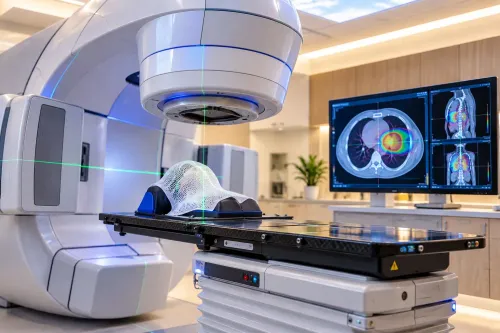
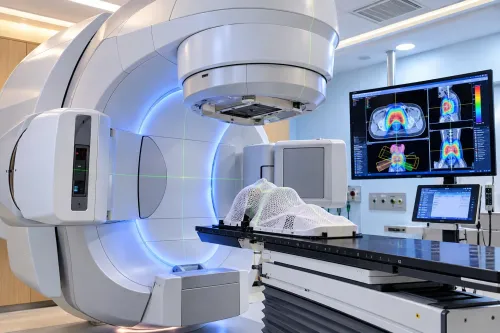
A typical pathway begins with an oncology consultation, examination and review of scans, followed by a planning CT in the treatment position. The team defines the tumour and nearby organs, chooses VMAT or another technique, checks the dose plan and quality assurance, then schedules daily image-guided sessions.
- At planning, expect to lie flat and remain still in a mould or positioning device. Tell the team if pain, breathlessness, poor hearing, or difficulty transferring from a wheelchair will make this unsafe.
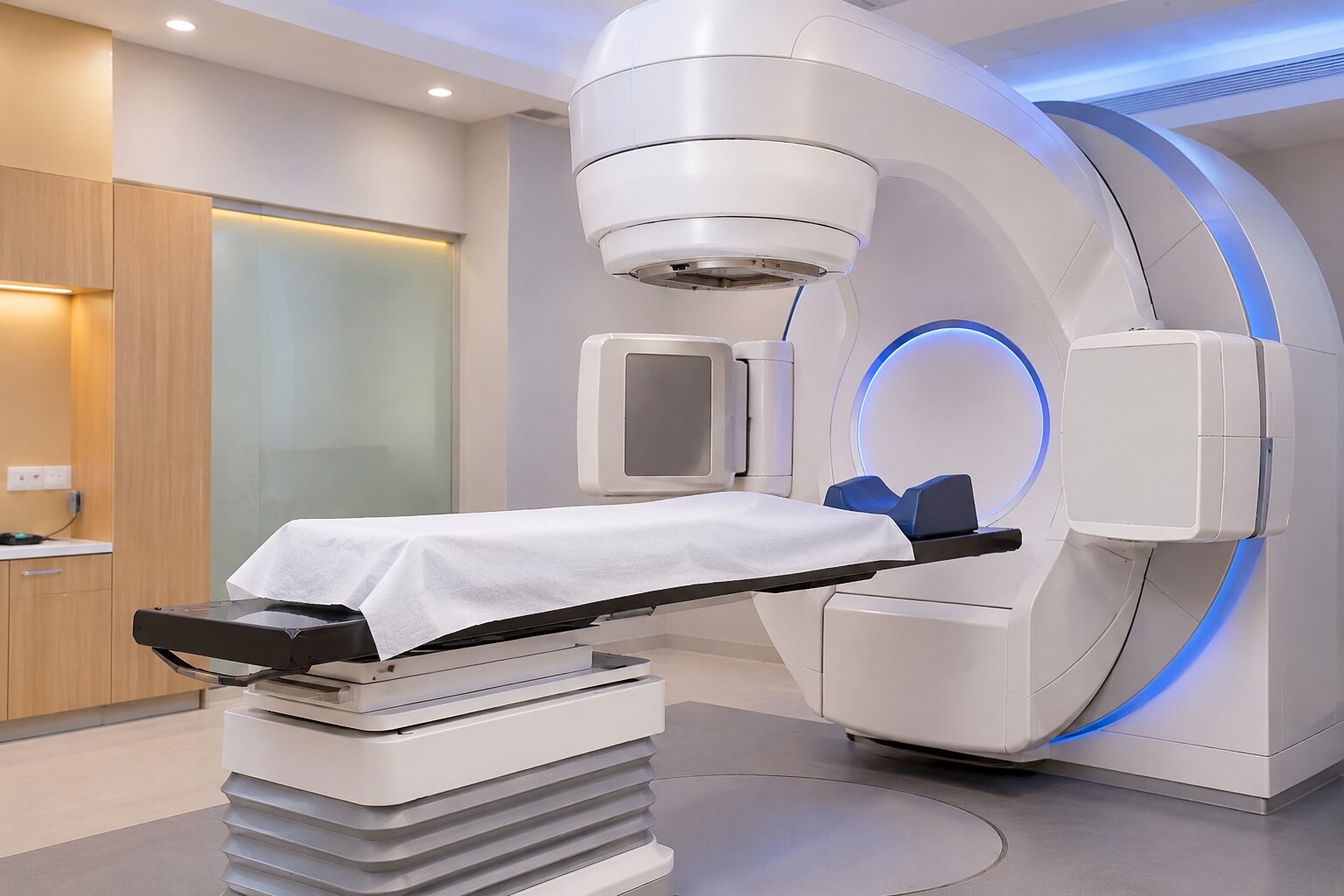
- At each visit, staff position you, take imaging, and deliver radiation while the treatment machine rotates around you. Sessions are usually brief, but travel, waiting, dressing, and transfers add to the daily burden. Ask for the total number of visits, transport time, and the plan if you miss one.
- During treatment, report symptoms early. Fatigue, skin redness, swallowing difficulty, diarrhoea, bowel discomfort, urinary frequency, or burning depend mainly on the treated area; chemotherapy or other systemic treatment can intensify them.
- Ask whether the plan requires breath-holding, special diet instructions, bladder filling, or caregiver help. Memory problems, delirium, uncontrolled pain, falls, or inability to remain still can make safe treatment impossible.
For vmat radiotherapy for elderly patients, the key question is not age alone but whether the expected benefit justifies the visits and side effects. Is vmat radiotherapy suitable for older adults in pune? The answer depends on tumour site, treatment goal, frailty, cognition, nutrition, mobility, and reliable support.
How to choose a safe, practical radiotherapy plan in Pune
Before consenting, verify four things: the proposed technique fits the tumour, the centre holds Atomic Energy Regulatory Board authorisation for its radiotherapy equipment and procedure, the plan has independent checks and patient-specific quality assurance, and you have practical support for every visit. The decision question is: is VMAT radiotherapy suitable for older adults in Pune?
Ask these questions in writing:
- Is the plan VMAT, fixed-field IMRT, 3D conformal therapy, stereotactic radiotherapy, or palliative treatment, and why is it preferable for this tumour?
- How many visits are required, and what happens if pain, illness, transport failure, or hospital admission causes a missed session?
- Will daily image guidance confirm positioning? Who reviews the plan, and does patient-specific QA use stated tolerance and action limits, such as those described in AAPM TG-218?
- What acute effects are expected, and whom do you call for fever, dehydration, uncontrolled pain, confusion, or a fall?
- Can the centre provide transfer assistance, wheelchair access, appointment coordination, and a plan for transport and caregiver absence?
Compare the radiotherapy options for seniors in Pune against the actual burden:
| Option | Practical advantage | Check before choosing |
|---|---|---|
| VMAT | Conforms dose during one rotating treatment | Nearby-organ constraints and QA |
| 3DCRT | Simpler planning and delivery | Whether normal-tissue dose is acceptable |
| Shorter schedule | Fewer journeys for frail patients | Evidence, tumour intent, and fractionation safety |
A shorter schedule is not a casual reduction. Dr Siddhesh Tryambake can help weigh tumour benefit against frailty, cognition, mobility, nutrition, and caregiver capacity before you commit.
Related services
Radiation Therapy Treatment in PCMC Advanced VMAT Radiotherapy at Phoenix Cancer Care Clinic, PCMC Phoenix Cancer Care Clinic offers expert guidance and comprehensive... View service → |
Cancer Screening Geriatric Oncology Services in PCMC Specialized Cancer Care for Senior Citizens at Phoenix Cancer Care Clinic At Phoenix Cancer Care Clinic, PCMC,... View service → |
Frequently asked questions
Is VMAT radiotherapy suitable for older adults in Pune?
Yes, when the cancer, treatment goal, physical reserve, cognition, comorbidities and available support make daily treatment safe and worthwhile. Age alone does not rule out VMAT.
What do clinicians check before recommending VMAT for an elderly patient?
They assess mobility, frailty, nutrition, cognition, kidney and heart function, medicines, previous radiation, cancer stage, expected benefit and the patient’s ability to attend each appointment.
How does VMAT compare with other radiotherapy options for seniors?
VMAT can shape dose around the tumour and reduce treatment time per session, but it is not automatically the best choice. Conventional 3D conformal radiation, IMRT, stereotactic treatment or shorter palliative schedules may fit better.
What daily demands and risks should older adults expect during VMAT?
You need accurate positioning and regular attendance, often over multiple weekdays. Side effects depend on the treated area and can include fatigue, skin changes, bowel or bladder symptoms, swallowing problems, or other organ-specific effects.
How can families choose a practical radiotherapy plan in Pune?
Ask about the treatment goal, number of visits, travel time, transport, caregiver availability, side-effect management, emergency contact arrangements and whether the centre can provide the required planning and image guidance.
Related service
Comfort Care Geriatric Cancer Care & Support Geriatric Cancer Care & Support in PCMC Comprehensive Geriatric Oncology Support at Phoenix Cancer Care Clinic, PCMC At Phoenix Cancer Care Clinic,... View service → |
Keywords