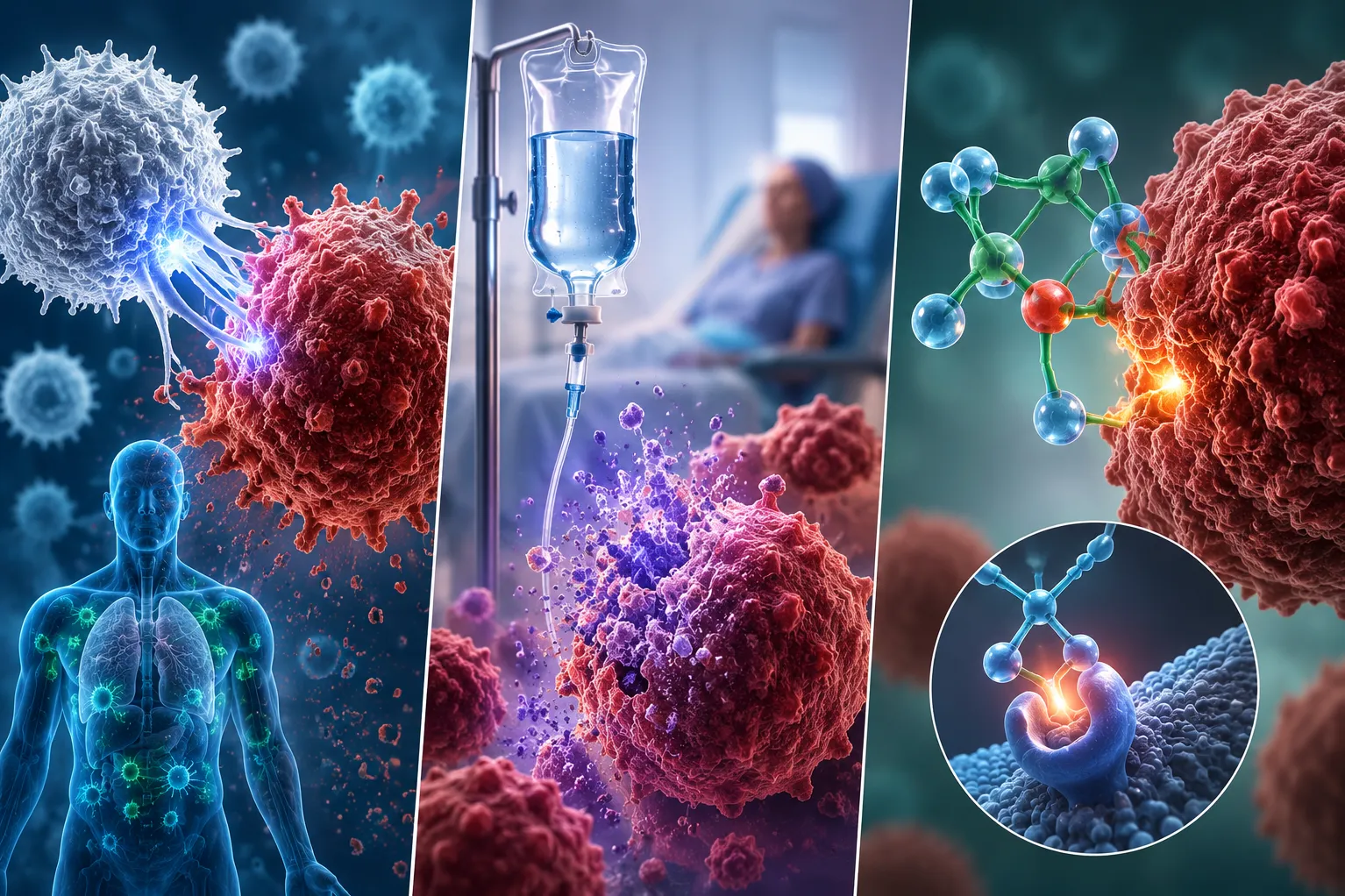
Patients frequently encounter the terms chemotherapy, targeted therapy and immunotherapy soon after a cancer diagnosis. All three are systemic treatments, but they act differently and require different eligibility assessments.
Advanced cancer immunotherapy may be valuable for selected patients, yet the best option is determined by the tumour’s biology, treatment goal and available clinical evidence.
Chemotherapy
Chemotherapy primarily affects rapidly dividing cells. Because cancer cells often divide quickly, these medicines can destroy them or slow their growth.
Chemotherapy is used across many solid tumours and blood cancers. Its advantages include decades of clinical experience, established protocols and effectiveness even when a specific target has not been identified.
Its limitations include effects on healthy rapidly dividing cells. Depending on the medicines, patients may experience low blood counts, nausea, mouth problems, hair loss, fatigue or nerve symptoms.
Targeted Therapy
Targeted medicines act on particular proteins, pathways or genetic changes that help cancer grow. A biopsy or blood sample may be tested to determine whether the tumour carries an actionable target.
These medicines are not automatically gentler than chemotherapy. Their side effects can include rash, diarrhoea, blood-pressure changes, liver abnormalities, bleeding risk or other drug-specific concerns.
The principal limitation is eligibility. If the necessary target is absent, the corresponding medicine is unlikely to help.
Immunotherapy
Immunotherapy helps the immune system respond to cancer. Checkpoint inhibitors are used in selected lung, kidney, skin, bladder, head and neck, gastrointestinal and other cancers. Some immune-based treatments are also used for specific blood cancers.
A major advantage is the possibility of durable control in a proportion of eligible patients. The limitation is that many patients do not respond, even when a recognised biomarker is present.
Immune-related inflammation can affect the lungs, bowel, liver, skin, kidneys or hormone-producing glands. These reactions require a different management approach from conventional chemotherapy side effects.
Questions to Ask Before Choosing
Patients and caregivers should ask:
- What is the exact pathological diagnosis?
- What is the treatment goal?
- Are biomarker or molecular tests required?
- What evidence supports this option?
- How will response be measured?
- What side effects need urgent attention?
- What happens if the treatment does not work?
- Will treatment affect future options?
Cost and travel requirements also deserve discussion. Some treatments require frequent infusions and monitoring, while others may be taken orally but still need regular review.
In Pune and PCMC, a medical oncologist can interpret pathology, scans and biomarker results together. Dr. Siddhesh Tryambake’s clinical focus includes medical oncology and haemato-oncology, allowing systemic treatment decisions to be considered within the complete disease context.
The right treatment is not necessarily the newest or most expensive option. It is the approach supported by the patient’s diagnosis, tumour biology, health status and treatment goals.
Keywords