Booking a marrow procedure requires more than finding a nearby diagnostic centre: you need to confirm who performs it, whether aspiration and biopsy are both available, and how the sample will be tested. By the end, you will know what to ask when comparing local facilities, what documents and medicines to discuss, and how to prepare for the appointment.
Key takeaways
- Confirm the facility performs aspiration and biopsy, not only routine blood collection.
- Ask about the doctor, pathology lab, fasting instructions, and report collection time.
- Bring your referral, medication list, blood reports, and any imaging records.
- Tell the team about blood thinners, allergies, pregnancy, and bleeding problems.
How to choose a facility for bone marrow aspiration near you
A search for bone marrow aspiration near me is not the same as booking an ordinary blood-collection appointment.
Tell the booking team that you need bone marrow aspiration, then confirm the clinician’s name and specialty, whether a haematologist or oncologist has reviewed the indication, and whether the procedure occurs on site or through a hospital or interventional facility.
Ask these questions before accepting an appointment:
- Where will the specimen be examined, and who will collect, label and transport it?
- Does the appointment include trephine biopsy, or aspiration alone?
- Can the facility send flow cytometry, cytogenetics such as karyotyping or FISH, and molecular testing when required?
- Do you need a referral or prescription, and which reports must you provide before booking?
- Will the clinician review your complete blood count, peripheral smear, previous pathology, imaging and treatment history?
A bone marrow test clinic Pimpri Chinchwad should explain which investigation is planned rather than offer a vague “marrow test.”
| Test | Sample taken | Booking point |
|---|---|---|
| Bone marrow aspiration | Liquid marrow containing cells | Ask whether ancillary tests can be added |
| Trephine biopsy | Cylindrical core of bone and marrow | Confirm whether it is performed during the same visit |
| Blood tests | Blood, including complete blood count or molecular samples | Suitable only when the clinician says marrow sampling is unnecessary |
Do not stop anticoagulants or antiplatelet medicines to secure an appointment; disclose them first. Fasting is not automatic with local anaesthetic, but instructions change if sedation is planned.
Local booking details to confirm in Pimpri Chinchwad
For bone marrow aspiration in Pimpri Chinchwad, contact Phoenix Cancer Care Clinic before visiting a blood-collection centre. The listed location is Pimpri Colony, Morewadi, Pune, Maharashtra, India; use Pimpri Colony and Morewadi as area landmarks and request the exact building, map pin, parking guidance, and a nearby landmark when booking.
Confirm the current phone number or official online booking channel and appointment hours, because these details are not safely assumed from a search listing. Ask whether a referral or prescription is required.
- Ask whether Dr Siddhesh Tryambake or another named haematologist or oncologist will assess why the test is needed.
- Confirm whether the clinic performs aspiration at its own premises. If it does not, ask whether the consultation is followed by referral to a hospital, pathology laboratory, or interventional facility, and obtain that facility’s address and booking responsibility.
- Confirm whether the plan is aspiration alone or aspiration plus trephine biopsy. The two samples answer different questions and often require separate laboratory handling.
- Ask who will label the tubes and biopsy core, transport them, and issue the report. Confirm whether flow cytometry, karyotyping, FISH, or molecular testing can be sent when indicated.
This makes bone marrow aspiration booking a specific local decision rather than a generic appointment. Bring your referral, recent CBC and smear reports, medication list, and previous pathology or imaging reports.
Related service
Procedure Guidance Bone Marrow Aspiration in PCMC – Expert Diagnosis at Phoenix Cancer Care Clinic Bone Marrow Aspiration: A Vital Diagnostic Procedure for Blood... View service → |
When aspiration, biopsy, or a blood test is the right investigation
A complete blood count (CBC) and peripheral smear are often the starting point, but they cannot show marrow structure or answer every marrow question. Choose the investigation based on the clinical concern, not simply because you are searching for a bone marrow test clinic Pimpri Chinchwad.
| Option | What it shows | When it applies |
|---|---|---|
| Blood test: CBC and peripheral smear | Counts and appearance of circulating blood cells | Initial assessment of anaemia, low platelets, abnormal white cells, or abnormal blood-film findings |
| Bone marrow aspiration | Liquid marrow removed through a needle; cells can undergo microscopy, flow cytometry, cytogenetics, or molecular testing | Unexplained low blood counts, suspected or known leukaemia, lymphoma, myeloma, myelodysplastic disease, marrow failure, or treatment-response monitoring |
| Trephine biopsy | A small cylindrical core of bone and marrow, showing architecture and cellularity | When marrow structure, fibrosis, infiltration, or overall cellularity must be assessed; often performed with aspiration |
Doctors often perform aspiration and trephine biopsy during one appointment because the samples answer different questions. Aspiration alone is not interchangeable with biopsy, and a blood-based alternative is appropriate only when it can answer the specific clinical question.
Before booking bone marrow aspiration in Pimpri Chinchwad, ask:
- Do I need aspiration alone, both procedures, or a blood-based test?
- Which ancillary studies will be sent: flow cytometry, karyotyping, FISH, or molecular tests?
- Where will each specimen be examined, and who will interpret the results?
What to bring and disclose before the appointment
Bring these documents to your bone marrow aspiration booking, including if you are arranging bone marrow aspiration in Pimpri Chinchwad:
- Prescription or referral showing the clinical question, such as unexplained low blood counts or suspected leukaemia.
- Recent complete blood count and peripheral smear reports.
- Previous biopsy or pathology reports and relevant imaging reports.
- Details of earlier cancer treatment, including chemotherapy, immunotherapy, radiation therapy, or stem-cell treatment.
- A full medication list, identification, and insurance documents if applicable.
Tell the clinician about aspirin, clopidogrel, warfarin, apixaban, rivaroxaban, insulin, and every other medicine or supplement you take. Do not stop a blood thinner independently; the responsible clinician decides whether adjustment is needed and when.
Disclose any bleeding disorder, previous unusual bleeding, low platelet count, allergy to local anaesthetic, difficulty with anaesthesia, or possible pregnancy. Low platelets do not automatically cancel the procedure; they require an individual bleeding-risk assessment and any necessary precautions.
Fasting is not automatically required when local anaesthetic is planned. Instructions change if intravenous sedation or another anaesthetic will be used, so follow the facility’s specific directions. Ask whether someone must accompany you, especially for sedation, and arrange transport if you may not feel comfortable driving afterward.
What happens during the procedure and after you leave
The visit commonly takes about 30 minutes or longer. The aspiration itself is brief, but consent, positioning, specimen labelling, dressing and observation add time.
1. The clinician reviews the reason for testing, answers questions and takes consent. You usually lie on your side or stomach so the posterior iliac crest—the back of the pelvic bone—is accessible.
2. The skin is cleaned, and local anaesthetic is injected. This usually limits sharp pain, but pressure, pulling or a brief aching sensation can occur when the anaesthetic area is tested and the sample is taken.
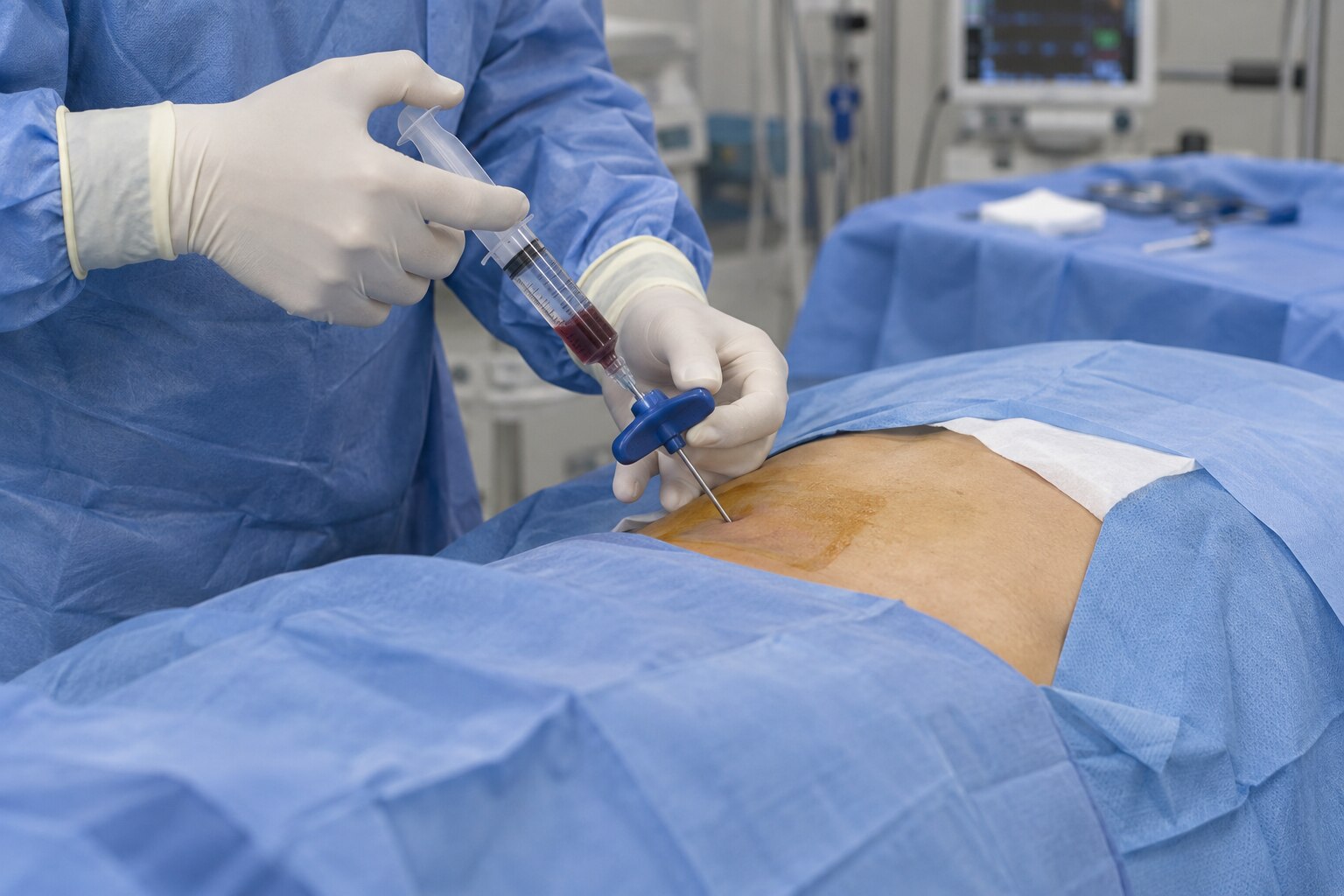
3. A needle enters the pelvic bone to collect liquid marrow. If a trephine biopsy is included, a separate trephine needle removes a small cylindrical core of bone and marrow. Ask during bone marrow aspiration booking whether you need aspiration alone or both procedures.
4. Staff label and prepare the specimens for microscopy and any requested flow cytometry, cultures, karyotyping, FISH or molecular testing. When searching for bone marrow aspiration near me, confirm who transports each sample and which laboratory examines it.
A small dressing covers the puncture site. Arrange loose clothing, rest afterwards, transport if you may not feel comfortable driving, and use only the pain-relief method approved by your treating team. Mild soreness or bruising can occur.
Contact the facility for increasing pain, persistent bleeding, fever, redness, swelling or drainage. Seek urgent care for severe or uncontrolled bleeding. Ask when each report is expected: microscopy may arrive sooner, while cultures, cytogenetic studies and molecular results can take longer.
Frequently asked questions
How do I choose a bone marrow aspiration facility near me?
Check that the facility performs bone marrow aspiration and biopsy, has a qualified clinician, uses a reliable pathology laboratory, and provides clear instructions for preparation, fees, reports, and follow-up.
What should I confirm when booking bone marrow aspiration in Pimpri Chinchwad?
Confirm the appointment date, procedure location, doctor, whether biopsy is also planned, preparation instructions, documents to bring, payment details, and when the pathology report will be available.
When is a bone marrow aspiration different from a biopsy or blood test?
A blood test examines circulating blood. Aspiration removes liquid marrow for cell analysis, while a biopsy removes a small core of bone and marrow to assess tissue structure. Your doctor chooses one or both based on the suspected condition.
What should I disclose before bone marrow aspiration?
Tell the clinical team about blood thinners such as warfarin, apixaban, rivaroxaban, or aspirin; bleeding disorders; allergies; pregnancy; diabetes; current medicines; and previous reactions to local anaesthetic.
What happens after bone marrow aspiration?
The site is dressed after the procedure, and you receive wound-care and activity instructions. Keep the dressing clean, follow pain-relief guidance, and contact the clinic for persistent bleeding, fever, increasing redness, swelling, or severe pain.
Keywords